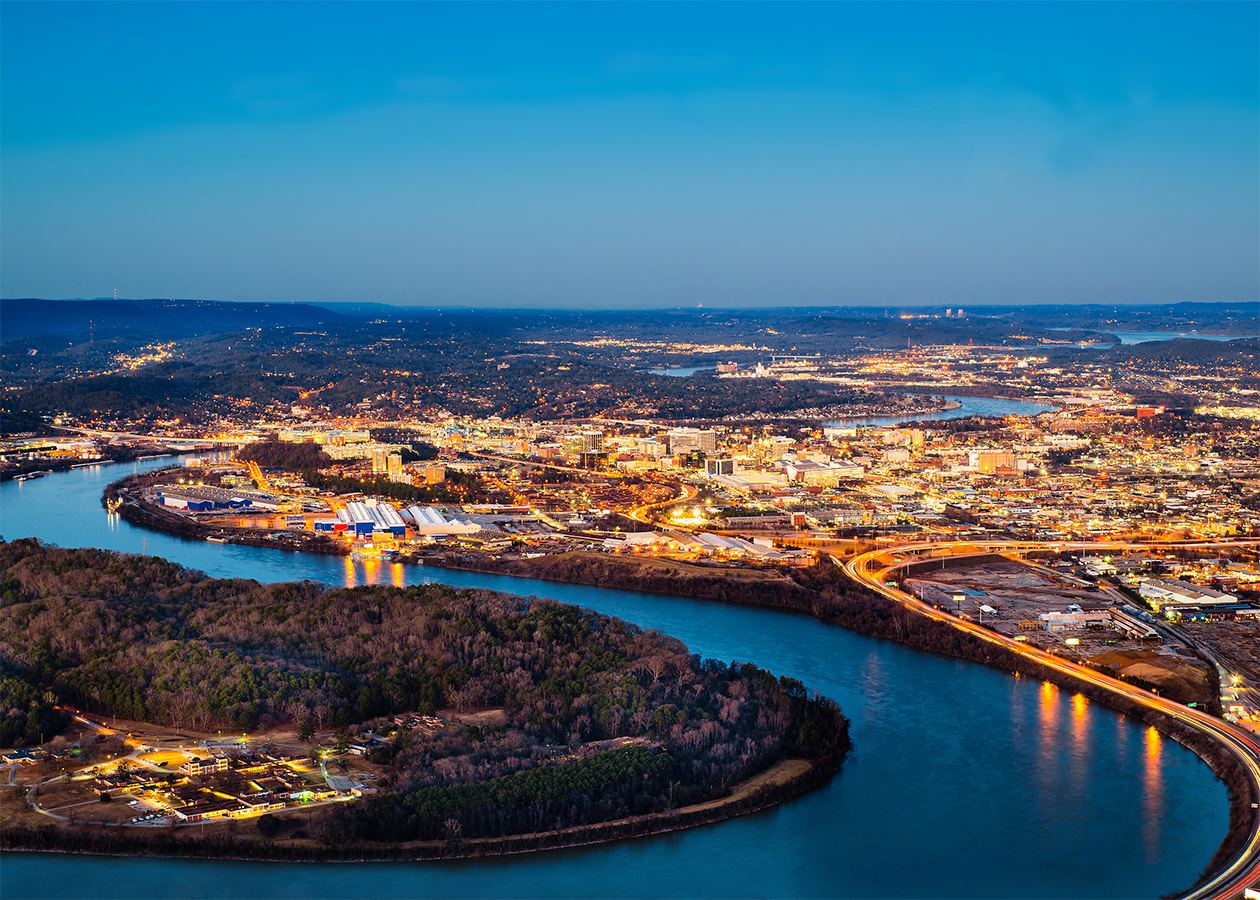
Nashville was founded on the bluffs of the Cumberland River in 1779 and became Tennessee's capital in 1843. In the twentieth century it became Music City, the capital of country music.
Top things to see
- Ryman Auditorium: the "Mother Church of Country Music," home of the Grand Ole Opry from 1943 to 1974 and still one of the best concert halls in America.
- Country Music Hall of Fame and Museum, plus historic RCA Studio B, where Elvis and the Everly Brothers recorded.
- Grand Ole Opry: the long-running radio show, now at the Opry House east of downtown.
- Lower Broadway: honky-tonks with live music from late morning to late night.
- The Parthenon: a full-scale replica of the Athens original, built for the 1897 Tennessee Centennial Exposition.
- The Hermitage: President Andrew Jackson's plantation home.
Getting there by river
Nashville sits on the Cumberland, about 190 river miles above its meeting with the Ohio at Smithland, Kentucky. River voyages reach it through the locks of Barkley and Cheatham dams, a less-traveled route that rewards those who take it.